Revenge Bedtime Procrastination: Why You Won’t Let the Day End
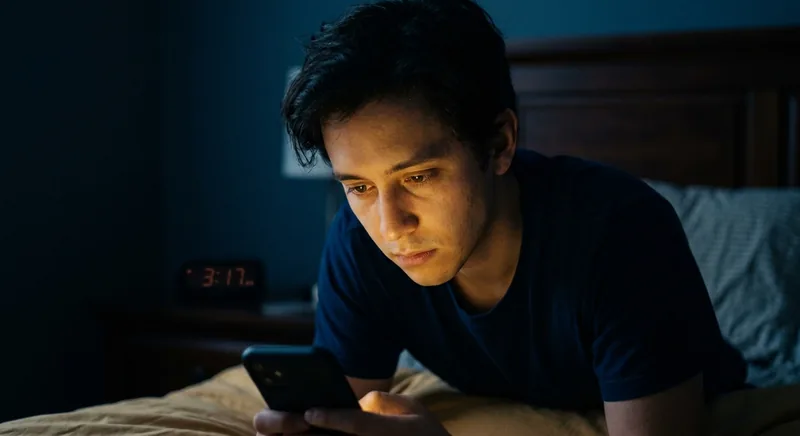
It is 1 AM. You have to wake up at 6. You are exhausted. And you are scrolling, watching, reading — doing anything except the one thing your body is begging for: sleep. Not because you are not tired. Because something in you refuses to let the day end.
Revenge bedtime procrastination — the deliberate sacrifice of sleep to reclaim personal time lost to obligations — has become a recognized pattern, particularly among people with demanding work schedules, caregiving responsibilities, or lives structured around other people’s needs. But the popular explanation (“you stay up late because you want free time”) misses the mechanism entirely.
The Fear Behind the Refusal to Sleep
Research on the fear primacy hypothesis[1] proposes that fear is the foundational emotion from which other emotional states derive. In revenge bedtime procrastination, the surface behavior (staying up late) is generated by a fear-based neural network responding to a specific threat: the loss of self, autonomy, or control.
For people whose days are consumed by obligations — work demands, childcare, eldercare, relentless productivity pressure — the nighttime hours represent the only window when they are not performing for someone else. Going to sleep means surrendering the last fragment of time that belongs to them. The neural network encodes this surrender as a threat[2]: loss of autonomy, loss of identity, loss of the only space where the self exists.
This is not a rational calculation (“I need more free time”). It is a subcortical alarm that fires when the person moves toward sleep: if you sleep now, you lose yourself. Tomorrow begins, and you disappear into obligations again. The phone scrolling is not the goal. It is the regulation strategy — the person is managing the dread of self-erasure by staying in the only window where they feel autonomous.
Structural insight: Revenge bedtime procrastination is not about wanting free time. It is about a fear-based neural network that encodes “surrendering the day” as “surrendering the self.” The person is not choosing to stay up. Their nervous system is blocking sleep because sleep means the end of the only period where they exist outside of their roles.
The Compound Damage: Sleep Loss as Neural Network Fuel
The irony is devastating: the behavior meant to reclaim the self actively destroys the self’s capacity to function. Chronic sleep deprivation impairs prefrontal cortex function[3], reducing the brain’s ability to regulate emotions, make decisions, and suppress fear responses. This means that the fear networks that drive daytime anxiety, people-pleasing, perfectionism, and overwhelm become stronger with each night of lost sleep.
Research on stress resilience[4] has documented that sleep is essential for cortisol regulation, memory consolidation, and neural repair. Chronically sleep-deprived individuals show elevated baseline cortisol, reduced emotional regulation capacity, and impaired extinction learning — meaning their fear networks become harder to modify, not easier. The person who stays up until 2 AM to feel free at night creates a more anxious, more overwhelmed, more depleted version of themselves for the next day’s obligations.
The cycle accelerates: worse days produce more desperate need for nighttime reclamation, which produces worse sleep, which produces worse days. The pattern is self-reinforcing at every point.
Why “Just Go to Bed Earlier” Does Not Work
The standard advice — set a bedtime, put the phone down, create a sleep routine — addresses the behavioral output while ignoring the fear generator. Going to bed earlier activates the neural network that encodes sleep as self-surrender. The person lies in bed, phone confiscated, and experiences the dread directly: this is it, the day is over, tomorrow I disappear again. The dread is so aversive that the phone comes back, the light comes on, and the cycle resumes.
This is structurally identical to telling an agoraphobic person to “just go to the mall” or a people-pleaser to “just say no.” The instruction is correct. The neural network makes it neurologically impossible to follow without addressing the fear that the behavior is managing.
The Connection to People-Pleasing and Burnout
Revenge bedtime procrastination rarely appears in isolation. It is most common among people whose daytime lives are structured around other people’s needs: people-pleasers who cannot say no, perfectionists who cannot stop working, caregivers who have no help, employees in cultures of overwork. The pattern is downstream of other fear-based patterns — the fear of rejection that drives the people-pleasing, the fear of failure that drives the overwork, the fear of abandonment that drives the caregiving compulsion.
Addressing only the bedtime behavior without addressing the daytime fear networks that produce the desperation for nighttime autonomy is like treating the symptom of a symptom. The bedtime procrastination is a symptom of the loss of daytime autonomy, which is a symptom of fear-based compliance, which is generated by a pathological neural network.
The Structural Approach: Reclaim the Day, Release the Night
The Efremov Method® approaches revenge bedtime procrastination by targeting the pathological neural networks that generate both the nighttime fear (loss of self) and the daytime patterns that produce it (people-pleasing, perfectionism, fear of failure, fear of rejection). When the daytime fear networks are collapsed, the person can set boundaries, decline demands, and maintain autonomy during waking hours — eliminating the desperate need to reclaim selfhood at 2 AM.
Simultaneously, the method can address the specific fear that fires when sleep approaches: the fear of tomorrow, the fear of losing control, the dread of re-entering the obligation cycle. When this fear is collapsed, sleep becomes what it is supposed to be — rest — rather than a surrender.
Frequently Asked Questions
References
- Andrei Efremov (2025). The Fear Primacy Hypothesis in the Structure of Emotional States: A Systematic Literature Review. Psychological Reports. DOI ↗↩
- Joseph E. LeDoux (2014). Coming to terms with fear. Proceedings of the National Academy of Sciences. DOI ↗↩
- Wen Li, Andreas Keil (2023). Sensing fear: fast and precise threat evaluation in human sensory cortex. Trends in Cognitive Sciences. DOI ↗↩
- Raffael Kalisch, Scott J. Russo, Marianne B. Müller (2024). Neurobiology and systems biology of stress resilience. Physiological Reviews. DOI ↗↩
Ready to see if this applies to your situation?
Work With Me →