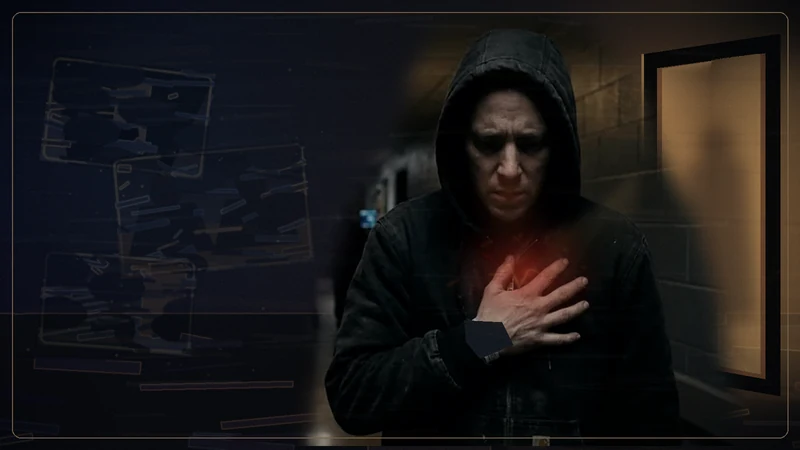
No. You do not have to recover a complete autobiographical memory, identify the “first trauma,” or repeatedly relive an event before change can occur. Some effective PTSD treatments deliberately use trauma memories, but memory retrieval is not a universal biological requirement for every form of change. In the Efremov Method®, the access point is the emotion, bodily sensation, impulse, pain pattern, state, or trigger that exists now.
Key takeaways
- A real reaction can exist without a clear conscious story about where it began.
- The past can remain incomplete, unknown, and private. The reaction happening now is enough to begin.
- Laboratory studies show that conditioned fear physiology can operate outside awareness and can change without explicit presentation of feared content.
- The Efremov Method works with that live reaction and checks the same trigger again for a zero response.
- Trying to force a missing memory is a poor goal because memory is reconstructive and vulnerable to suggestion.
People often arrive at trauma work carrying a second fear on top of the first: What if I cannot remember enough to get better? They may have fragments, body sensations, a blank period, or no identifiable event at all. Then they hear that healing requires finding the root, recovering the original scene, telling the whole story, or returning to the exact moment when everything began.
That demand creates an impossible examination. The person is told that the answer is buried in a past they cannot access—and that progress depends on producing it.
The question becomes clearer when we separate three things that are often collapsed into one word: memory.
These three layers can overlap. They are not identical. A missing story does not make the current reaction unreal. And a current reaction does not authorize anyone to invent the missing story.
A person can suffer without a usable trauma memory
This is not merely a theoretical possibility. People can show post-traumatic symptoms while lacking a conscious memory of the event—for example after drug-facilitated assault, loss of consciousness, early-life events, or periods of amnesia.
In 2022, Hannah May and colleagues interviewed nine women who had sought psychological help for PTSD without memories of the traumatic event. Participants described emotional and sensory reactions without recognizable triggers and reported that therapy often felt designed for people who could remember and discuss what happened. What helped included working with emotions and sensations, receiving clear explanations about trauma and memory, and being given permission not to remember.[1]
Its importance is direct: the clinical problem is real. A person can need change even when no coherent narrative is available, and useful work can begin with emotion and sensation rather than a reconstructed scene.
The body can learn a signal that conscious awareness does not report
In a human fear-conditioning experiment, David Knight, Hanh Nguyen, and Peter Bandettini presented tones above and below participants’ threshold of awareness. Conscious expectancy distinguished danger from safety only when the tones were noticed. Skin conductance—a measurable autonomic response—still differentiated the conditioned signals even when participants did not consciously detect them.[2]
The experiment isolates one decisive fact: a learned physiological response can operate when conscious awareness does not contain the signal that is driving it. The body can run the program before the mind has a story.
Joseph LeDoux has argued for keeping defensive survival circuits separate from the conscious feeling and label a person calls fear. The nervous system can organize protection before the conscious mind has assembled a verbal account of what is happening.[3]
The distinction is decisive: the conscious story and the operating physiology are not the same thing. Change does not have to wait for the story to become complete.
Can fear change without consciously presenting the feared content?
Two laboratory programs provide an unusually clear answer to the narrow question: Is explicit conscious presentation the only possible route to changing fear physiology?
Koizumi et al.: conditioned fear reduced without showing the feared stimulus during training
Ai Koizumi and colleagues used decoded fMRI neurofeedback after laboratory fear conditioning. Participants received reward when their visual cortex spontaneously expressed the target neural pattern. They were not shown the feared conditioned stimulus during the reinforcement procedure and remained unaware of the content and purpose of the training. Later, physiological fear responses to the target were lower.[4]
Taschereau-Dumouchel et al.: common animal fears targeted outside awareness
A later double-blind proof-of-concept study used brain-pattern decoders for feared animal categories. Seventeen participants with strong but subclinical animal fears received reward when the target representation occurred without conscious awareness. Skin conductance and amygdala responses were reduced for the targeted category relative to the control category.[5]
The principle is clear: explicit confrontation with the feared image is not the only route by which measurable fear physiology can change. The Efremov Method uses no scanner and asks for no recovered scene; it begins with the live reaction that is already available now.
Memory-based treatments work. That does not make memory mandatory for all change.
An honest answer cannot pretend that established trauma treatments avoid memory. Many do not.[9]
| Approach | Role of trauma memory | What follows—and what does not |
|---|---|---|
| Prolonged Exposure | Repeatedly revisits and recounts the trauma memory and approaches avoided reminders. | It is an evidence-based PTSD treatment. Its effectiveness does not prove that every effective process must use the same route. |
| EMDR | The person calls the upsetting memory to mind while attending to bilateral stimulation; detailed spoken disclosure is often not required. | It is evidence-based for PTSD. It still generally requires an identifiable target memory. |
| Cognitive Processing Therapy | Works primarily with trauma-related beliefs and meanings; the amount of detailed recounting can differ. | It shows that treatment can focus on interpretation rather than only repeated narrative exposure. |
| Present-Centered Therapy | Focuses on current life problems and does not require discussing the trauma itself. | It can help some people, although current VA decision-aid estimates show lower average response than the leading trauma-focused treatments. |
| Efremov Method® | Does not require identifying, narrating, or reliving an original event. The present reaction is selected. | The live reaction is the target. The same trigger is tested afterward, so the endpoint is observable rather than inferred from a story. |
The correct conclusion is not “memory work is useless.” The correct conclusion is: memory work is one route, not a law of nature. A person should not be told they are unable to change merely because they cannot produce a complete scene.
Why trying to recover a missing scene can create a new problem
Memory is not a video file waiting in perfect form. It is reconstructive. New information, repeated questions, expectations, imagery, and suggestion can alter what a person later remembers with confidence.
Elizabeth Loftus’s review of three decades of misinformation research describes how misleading information can impair memory for what happened and, under some conditions, contribute to rich false beliefs about events that did not occur.[6]
A symptom is not proof of a hidden event. Panic, disgust, pain, shutdown, or a body sensation can be completely real without telling you which historical event caused it. No responsible practitioner should pressure a person to manufacture an origin story, confirm a suggested abuse narrative, or treat imagination as recovered fact.
This does not mean all delayed or recovered memories are false. It means confidence is not the same as verification, and suggestive memory excavation carries risk. When a memory is absent, absence is often the most honest description.
The Efremov Method starts with what can be checked now
A memory-first approach asks:
- What happened?
- When did it begin?
- Who caused it?
- What was the first scene?
- What does the story mean?
The Efremov Method asks a different operational question:
The access point can be an emotion, bodily sensation, impulse, pain pattern, state, or specific trigger. The person does not have to reveal private history, find the earliest event, enter hypnosis or trance, perform age regression, or repeatedly relive an experience.
History can matter for medical records, safety, legal evidence, relationships, and understanding. But it is not the operating target of the Efremov Method. The reaction that exists now is the address.
The endpoint is also in the present. The same selected trigger is checked again. Does the same reaction still launch, or not? The past may remain unknown. The result cannot hide.
What this changes in practice
Conditioned physiology can operate outside conscious awareness. People can suffer without a usable trauma memory. Suggestion can distort memory.
A complete autobiographical account is not a biological requirement for reaching an active response.
The reaction that exists now is used directly, without recovering the origin or reliving the event.
The same trigger is checked again. It either still launches the selected reaction, or it produces zero charge. The result cannot hide in interpretation.
When remembering still matters
“You do not have to remember” should never be turned into “memory is irrelevant.” Seek qualified clinical care when symptoms include severe dissociation, flashbacks, self-harm risk, psychosis, substance withdrawal, major sleep disruption, or impaired daily functioning. A licensed clinician can assess PTSD and discuss evidence-based options.
Memory also matters when facts must be established. A therapeutic interpretation is not forensic evidence. If an event may involve a crime, abuse, workplace exposure, or medical injury, the standards for evidence are different from the standards for exploring a feeling.
Finally, do not stop an effective treatment because another approach uses a different model. Prolonged Exposure, CPT, and EMDR have substantial evidence for PTSD. The useful question is not which theory wins in the abstract. It is what process is appropriate, safe, and measurable for the person in front of you.
Frequently asked questions
References
- May H, Paskell R, Davies C, Hamilton-Giachritsis C. (2022). Having permission not to remember: perspectives on interventions for post-traumatic stress disorder in the absence of trauma memory. European Journal of Psychotraumatology 13:2055295. DOI ↩
- Knight DC, Nguyen HT, Bandettini PA. (2003). Expression of conditional fear with and without awareness. PNAS 100:15280–15283. DOI ↩
- LeDoux JE. (2014). Coming to terms with fear. PNAS 111:2871–2878. DOI ↩
- Koizumi A, Amano K, Cortese A, et al. (2017). Fear reduction without fear through reinforcement of neural activity that bypasses conscious exposure. Nature Human Behaviour 1:0006. DOI ↩
- Taschereau-Dumouchel V, Cortese A, Chiba T, et al. (2018). Towards an unconscious neural reinforcement intervention for common fears. PNAS 115:3470–3475. DOI ↩
- Loftus EF. (2005). Planting misinformation in the human mind: a 30-year investigation of the malleability of memory. Learning & Memory 12:361–366. DOI ↩
- Cummings KA, Lacagnina AF, Clem RL. (2021). GABAergic microcircuitry of fear memory encoding. Neurobiology of Learning and Memory 184:107504. DOI
- Craske MG, Hermans D, Vervliet B. (2018). State-of-the-art and future directions for extinction as a translational model for fear and anxiety. Philosophical Transactions of the Royal Society B 373:20170025. DOI
- U.S. Department of Veterans Affairs, National Center for PTSD. Prolonged Exposure, EMDR, Cognitive Processing Therapy, and Present-Centered Therapy treatment overviews. Treatment Decision Aid. ↩
Your past can remain private. The reaction you want changed must be specific.
Work With Me →The Efremov Method® teaches a self-applicable skill. It does not diagnose hidden trauma or PTSD. Immediate danger, self-harm risk, persistent dissociation, or unexplained memory loss require appropriate licensed care.