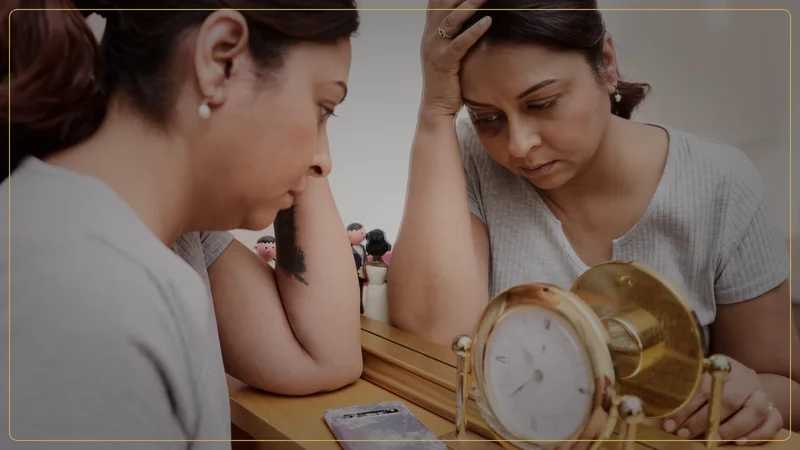
Yes. Chronic stress can accelerate several biological processes associated with aging. Repeated alarm can increase multisystem allostatic load, shorten telomeres in some cell populations, accelerate DNA-methylation age, disturb mitochondrial energy regulation, amplify inflammatory aging, disrupt sleep, and weaken recovery. The calendar does not suddenly jump forward. The body simply spends repair capacity faster than it restores it.
Key takeaways
- Chronological age is time lived. Biological aging is the changing condition of cells, tissues, and regulatory systems.
- There is no single biological clock. Telomeres, epigenetic clocks, allostatic load, inflammation, and physical function measure different layers.
- Long-term caregiving stress has been linked with faster IL-6 increase, shorter telomeres, and greater cumulative physiological burden.
- Stress accelerates aging through repeated sympathetic and endocrine activation, inflammatory signaling, sleep disruption, oxidative load, and altered repair.
- A single wrinkle, gray hair, CRP result, telomere test, or commercial “biological age” score cannot tell the whole story.
- The Efremov Method turns chronic stress into exact fear networks, removes the charge, and verifies the result against the same trigger.
You can feel old after one terrible week.
The face looks tired. The body feels heavy. Sleep stops restoring you. Small tasks cost more. That feeling is not the same as biological aging—but it points toward the question underneath it:
What happens when a body lives as if every week is the terrible week?
Stress is designed to spend resources. It redirects energy toward immediate survival: faster detection, faster action, more fuel, more clotting readiness, more inflammatory preparation, less investment in whatever can wait. For a real emergency, that trade is intelligent. The problem begins when the emergency never receives a convincing ending.
Aging is not one clock
When people ask whether stress makes them age faster, they often imagine the face. Science asks a broader question: are the body’s regulatory systems changing faster than expected for chronological age?
Different measurements answer different versions of that question.
These clocks can disagree. A person can have a favorable telomere result and high blood pressure. Another can have an older epigenetic estimate and excellent physical function. There is no single hidden odometer inside the body.
The useful question is not “What is my one true biological age?” It is “Which systems are carrying avoidable load, and what keeps generating it?”
Allostatic load: the price of repeated adaptation
Bruce McEwen used the language of allostasis to describe how the body maintains stability by changing itself. Heart rate, cortisol, blood pressure, glucose, attention, and immune activity move because the situation demands movement.[1]
Allostasis is not disease. It is adaptation. Allostatic load is the cumulative wear that appears when the same systems are activated too often, fail to switch off, or must compensate for one another over long periods.
In the MacArthur Studies of Successful Aging, Teresa Seeman and colleagues combined ten biological parameters into an allostatic-load score in 1,189 adults aged 70 to 79. Higher baseline load predicted greater seven-year mortality and greater decline in physical and cognitive function, even after accounting for baseline health and demographic factors.[2]
This is why one normal cortisol result cannot clear the whole system and one high value cannot diagnose chronic stress. Aging pressure is distributed.
Telomeres: one cellular record of repeated load
Telomeres are repeating DNA structures at chromosome ends. They help protect genetic material during cell division. In many cell types they shorten over time, although the rate varies with genetics, cell turnover, disease, exposure, and measurement method.
In 2004, Elissa Epel, Elizabeth Blackburn, and colleagues studied 58 healthy premenopausal mothers: 39 caring for a chronically ill child and 19 mothers of a healthy child. Greater perceived stress and longer caregiving duration were associated with shorter telomeres, lower telomerase activity, and greater oxidative stress in peripheral blood mononuclear cells.[3]
Women in the highest-stress group had telomeres about 550 base pairs shorter than those in the lowest-stress group. Based on estimates used in that paper, the difference was described as equivalent to roughly 9–17 additional years of telomere aging.
That number belongs to that study. It is not a calculator that converts your stressful years into biological years. The sample was small, the groups were specific, and telomere length is one cellular measure—not the age of an entire person.
A later systematic review and meta-analysis assembled 22 studies with 8,948 participants. The average association between perceived stress and shorter telomeres was statistically significant but very small, and correction for possible publication bias weakened it further.[4]
The two results are not enemies. A strongly selected chronic-stress group can show a large contrast while the average across broad populations is much smaller. Stress exposure, timing, cell type, age, sex, health, and measurement quality all change what appears.
Epigenetic clocks: stress can alter the age written in methylation
DNA methylation is one way cells regulate which genes are easier or harder to use. Epigenetic clocks estimate age from methylation patterns at selected CpG sites. When the estimate is older than expected for chronological age, researchers call it age acceleration.
In an urban African American cohort of 392 adults, cumulative lifetime stress predicted accelerated epigenetic aging after adjustment for blood-cell composition and lifestyle factors. The effect was driven mainly by personal life stressors and became more pronounced with advancing age.[5]
The same investigation found that many clock sites lay within glucocorticoid-response elements. In separate samples, exposure to the glucocorticoid receptor agonist dexamethasone changed methylation at part of the clock and changed transcription in many neighboring genes.
Epigenetic clocks are powerful research tools, but different clocks were built for different outcomes. One is optimized for chronological age, another for mortality risk, another for pace of aging. A commercial report can look precise to one decimal place while still representing one model applied to one tissue sample.
Inflammaging: when the emergency response becomes background noise
Claudio Franceschi and colleagues introduced the term inflammaging for the chronic, low-grade pro-inflammatory tendency that accompanies aging.[8] Modern reviews place chronic inflammation among the interacting hallmarks of aging, alongside telomere attrition, epigenetic alterations, mitochondrial dysfunction, cellular senescence, stem-cell exhaustion, and impaired communication between cells.[9]
Stress enters this system through several doors:
David Furman and colleagues describe systemic chronic inflammation as a contributor across cardiovascular, metabolic, renal, hepatic, autoimmune, neurodegenerative, and malignant disease pathways over the life course. Psychological stress appears among the inputs that can sustain that phenotype.[7]
Stress is one accelerant, not the entire fire. Infection, tissue injury, autoimmunity, smoke, pollution, metabolic dysfunction, chronic pain, medication, and aging biology itself can enter the same downstream pathways.
The caregiving study: immune aging sped up fourfold
Caregiving for a spouse with dementia creates an unusually persistent form of real-life stress: sleep disruption, grief, responsibility, uncertainty, financial pressure, and repeated exposure to loss.
Janice Kiecolt-Glaser and colleagues followed 119 caregivers and 106 noncaregivers for six years. IL-6 increased with age in both groups—but the average rate of increase in caregivers was about four times as large.[6]
The pattern did not immediately normalize after the spouse died. Former caregivers continued to show an annual IL-6 slope similar to current caregivers for years.
This is what chronic stress can do to time: the event keeps moving through biology after the external situation changes. The body has learned a rate of operation, not merely recorded a memory.
The cortisol paradox: more alarm, less braking
Cortisol is often treated as a simple aging villain. In reality, it is part of the body’s attempt to regulate the emergency. It mobilizes energy and also helps restrain inflammatory activity.
Under prolonged threatening stress, glucocorticoid receptors can become less sensitive. Sheldon Cohen and colleagues found that greater glucocorticoid resistance predicted greater production of local pro-inflammatory cytokines after viral challenge.[11]
The result is not “too much cortisol” or “too little cortisol” in one simple sense. It is loss of coordination. A system that should rise and return begins to rise, compensate, resist, and remain noisy.
Bone marrow hears chronic stress
Chronic stress reaches beyond hormones already circulating in the blood. It can change the production line.
Tobias Heidt and colleagues found that chronic variable stress activated hematopoietic stem cells in mice through sympathetic signaling in the bone-marrow niche, increasing inflammatory monocytes and neutrophils. A human occupational-stress component also showed increased circulating inflammatory cell classes under higher strain.[12]
This matters for aging because the immune system is continually renewed. When the alarm changes what the marrow produces, stress is not simply adding a temporary feeling. It is influencing the cellular population that will carry tomorrow’s response.
Sleep turns one stressor into two
Chronic stress often enters the night. The person may fall asleep late, wake repeatedly, rehearse tomorrow, clench the jaw, or rise without feeling restored.
A systematic review and meta-analysis of 72 studies involving more than 50,000 adults found that sleep disturbance was associated with higher CRP and IL-6. Long sleep duration was also associated with higher levels of both markers; the relationship was not a simple “less is always worse” line.[10]
Sleep disturbance matters twice:
- It is an output of the alarm network.
- It becomes a new biological input that increases inflammatory and metabolic burden the next day.
The network spends the night, then the body pays interest during the day.
Mitochondria: repeated demand changes the energy economy
Mitochondria are not only power plants. They respond to glucocorticoids, catecholamines, inflammation, nutrient state, and neural signals. They help determine how energy is produced, where it is allocated, and what oxidative by-products accompany that work.
Martin Picard and Bruce McEwen reviewed the evidence linking psychological stress with mitochondrial structure and function across animal and human studies.[14] The direction varies by tissue, duration, and dose: acute demand can strengthen capacity; chronic unremitting demand can degrade efficiency and increase oxidative burden.
That distinction mirrors the whole article. Stress is not harmful because activation exists. Stress becomes aging pressure when activation repeatedly exceeds recovery.
Can exercise buffer the damage?
Physical activity is not a magical eraser of fear, but it changes the body receiving the signal.
In a study of 62 postmenopausal women, higher perceived stress was associated with shorter telomeres among women who did not meet a modest activity threshold. The association was not evident among women who were physically active.[13]
The study was cross-sectional and small, but the principle is useful: the effect of a stressor depends on the system’s resources. Sleep, movement, nutrition, relationships, medical care, and material safety can change how much biological damage the same signal produces.
They do not, however, remove the signal itself.
Why one biological-age test can mislead you
A commercial test can return a number that looks more authoritative than the biology behind it.
| Test | What it measures | What it cannot do alone |
|---|---|---|
| Telomere length | Average chromosome-end length in the sampled cell population. | State the age of every tissue or identify stress as the source. |
| Epigenetic clock | A model built from DNA-methylation patterns. | Replace clinical history, function, or every other aging pathway. |
| Allostatic load | A composite across selected physiological systems. | Act as one standardized universal blood test. |
| CRP / IL-6 | Part of inflammatory signaling at a specific time. | Distinguish infection, adiposity, sleep, fear, injury, or another source by itself. |
| Appearance | Visible skin, hair, posture, and expression. | Measure cellular, immune, epigenetic, or cardiovascular aging. |
Do not buy a frightening number and then let the number become a new chronic trigger. Measurement is useful when it answers a defined question and can be repeated under comparable conditions.
Chronic stress is not one cloud—it is a stack of fear networks
The word stress hides the mechanism. It can mean workload, grief, noise, poverty, illness, uncertainty, conflict, sleep loss, or the body’s direct response to infection and pain.
Psychological chronic stress becomes more precise when translated into the fear networks that keep firing:
- the message that could contain rejection;
- the face that predicts humiliation;
- the deadline that predicts failure;
- the silence that predicts abandonment;
- the body sensation that predicts catastrophe;
- the bill that predicts helplessness;
- the success that predicts exposure or attack;
- the need to rest that predicts guilt.
Each network has a trigger, a fear charge, a body output, and a protective action. Together they create the weather people call stress.
How the Efremov Method removes the fear-driven aging load
The method does not try to relax “chronic stress” as one abstract condition. It selects the exact network that keeps spending the body.
No recovered origin, trauma narration, regression, or trance is required. The present reaction already contains the address.
The target is source removal. When a fear network stops firing, it stops adding its own sympathetic, endocrine, muscular, sleep, behavioral, and inflammatory demand. The calendar continues. The unnecessary alarm does not.
If a biological aging layer is being measured, keep the tests separate. The same cue verifies the reaction. Repeated comparable biomarkers, function tests, or validated aging measures track the body over time. A story does not substitute for a trigger test, and a trigger test does not substitute for a blood test.
What can improve when the alarm ends?
The first change is immediate and observable: the cue no longer launches the old reaction. From there, the body no longer has to produce the same repeated output from that network.
This is not cosmetic anti-aging. It is a change in what the organism is asked to pay for every day.
When accelerated aging requires medical evaluation
Persistent fatigue, unexplained weight change, progressive weakness, new cognitive change, sleep apnea symptoms, chest pain, sustained high blood pressure, abnormal blood counts, significant inflammatory-marker elevation, endocrine symptoms, or rapidly changing physical function require appropriate medical assessment.
Stress can accelerate aging biology. It should not be used to erase thyroid disease, anemia, infection, autoimmune disease, sleep disorders, medication effects, cardiovascular disease, metabolic disease, or another physical cause.
Once the medical layer is being handled, the source question becomes sharper: which fear networks are still making the body pay for danger that is no longer here?
Frequently asked questions
References
- McEwen BS. (1998). Protective and damaging effects of stress mediators. New England Journal of Medicine 338:171–179. DOI ↩
- Seeman TE, McEwen BS, Rowe JW, Singer BH. (2001). Allostatic load as a marker of cumulative biological risk: MacArthur studies of successful aging. PNAS 98:4770–4775. DOI ↩
- Epel ES, Blackburn EH, Lin J, et al. (2004). Accelerated telomere shortening in response to life stress. PNAS 101:17312–17315. DOI ↩
- Mathur MB, Epel E, Kind S, et al. (2016). Perceived stress and telomere length: a systematic review, meta-analysis, and methodologic considerations for advancing the field. Brain, Behavior, and Immunity 54:158–169. DOI ↩
- Zannas AS, Arloth J, Carrillo-Roa T, et al. (2015). Lifetime stress accelerates epigenetic aging in an urban, African American cohort: relevance of glucocorticoid signaling. Genome Biology 16:266. DOI ↩
- Kiecolt-Glaser JK, Preacher KJ, MacCallum RC, et al. (2003). Chronic stress and age-related increases in the proinflammatory cytokine IL-6. PNAS 100:9090–9095. DOI ↩
- Furman D, Campisi J, Verdin E, et al. (2019). Chronic inflammation in the etiology of disease across the life span. Nature Medicine 25:1822–1832. DOI ↩
- Franceschi C, Bonafè M, Valensin S, et al. (2000). Inflamm-aging: an evolutionary perspective on immunosenescence. Annals of the New York Academy of Sciences 908:244–254. DOI ↩
- López-Otín C, Blasco MA, Partridge L, Serrano M, Kroemer G. (2023). Hallmarks of aging: an expanding universe. Cell 186:243–278. DOI ↩
- Irwin MR, Olmstead R, Carroll JE. (2016). Sleep disturbance, sleep duration, and inflammation: a systematic review and meta-analysis of cohort studies and experimental sleep deprivation. Biological Psychiatry 80:40–52. DOI ↩
- Cohen S, Janicki-Deverts D, Doyle WJ, et al. (2012). Chronic stress, glucocorticoid receptor resistance, inflammation, and disease risk. PNAS 109:5995–5999. DOI ↩
- Heidt T, Sager HB, Courties G, et al. (2014). Chronic variable stress activates hematopoietic stem cells. Nature Medicine 20:754–758. DOI ↩
- Puterman E, Lin J, Blackburn E, O’Donovan A, Adler N, Epel E. (2010). The power of exercise: buffering the effect of chronic stress on telomere length. PLOS ONE 5:e10837. DOI ↩
- Picard M, McEwen BS. (2018). Psychological stress and mitochondria: a systematic review. Psychosomatic Medicine 80:141–153. DOI ↩
- Efremov A. (2024). Psychosomatics: Communication of the Central Nervous System through Connection to Tissues, Organs, and Cells. Clinical Psychopharmacology and Neuroscience 22:565–577. DOI
- Efremov A. (2025). The Fear Primacy Hypothesis in the Structure of Emotional States: A Systematic Literature Review. Psychological Reports. DOI
Time will keep moving. The old alarm does not have to keep charging you for it.
Work With Me →The Efremov Method® teaches a self-applicable skill. It does not diagnose or prescribe. New or progressive symptoms, abnormal tests, medical emergencies, and medication changes require appropriate licensed care.